AS9100 to IA9100 Transition (2026): What Aerospace Actuator Buyers Need to Know
AS9100 is moving toward IA9100 after ISO 9001:2026. Use this aerospace actuator machining checklist to audit cyber, MSA, traceability, and APQP supplier risk.
Decision-level conclusion: As of July 6, 2026, aerospace buyers should treat the AS9100 to IA9100 transition as a supplier-risk program, not as a simple naming update. The practical move is to start asking critical actuator machining suppliers for SPC, MSA, FAI, material-traceability, APQP, and cybersecurity evidence now, while keeping final RFQ cutoffs conditional until IAQG publishes the final text and certification transition rules.
For decades, AS9100 has been the baseline quality management standard for aerospace, space, and defense manufacturing. The International Aerospace Quality Group (IAQG) has been preparing the next 9100-series revision and the IA naming convention so the aerospace quality-management system can be used consistently across regions.
Why this matters for actuator machining: flight-control and defense actuators fail through small, traceable process deviations, not just through obvious dimensional rejects. A final CMM report can prove that one sampled part passed; it cannot prove that the tool, process capability, material lot, sub-tier finishing step, and controlled-unclassified-information handling were stable across the order.
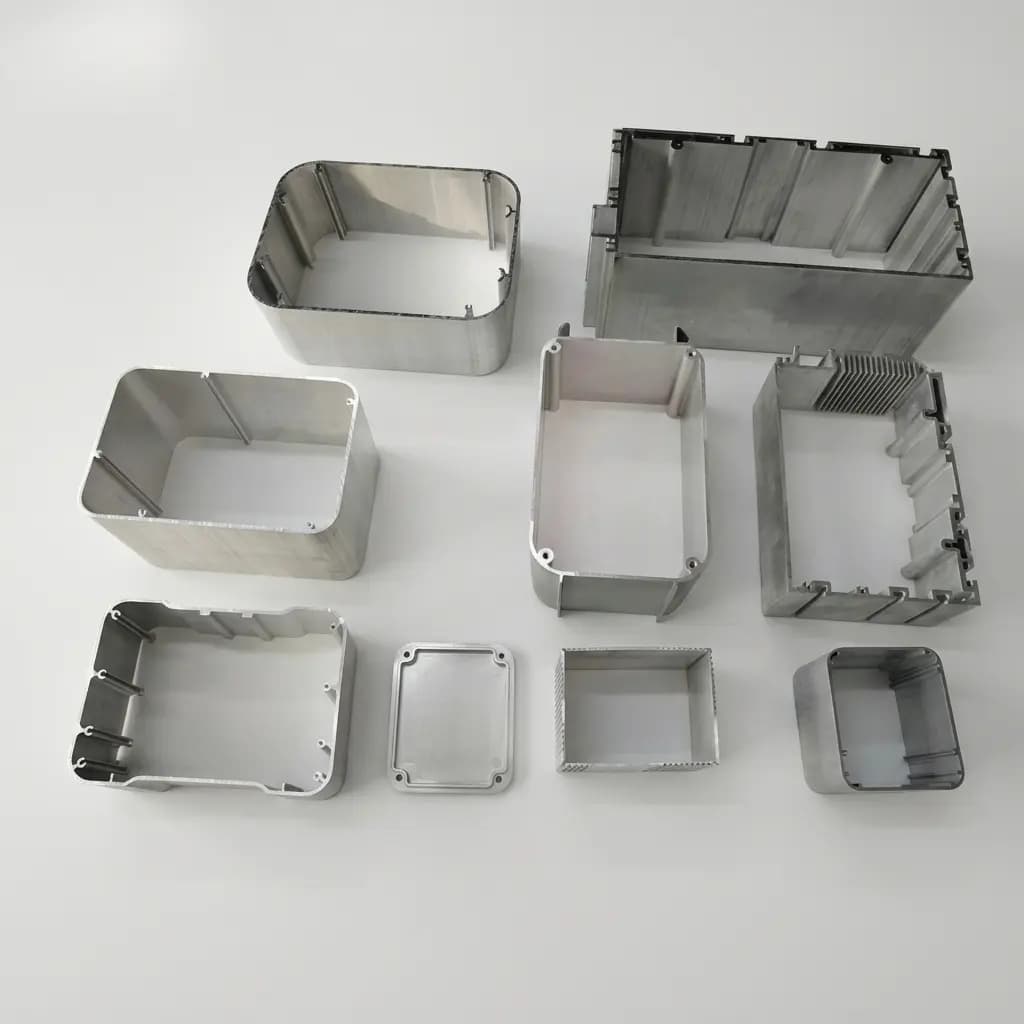
If you buy precision machined components such as flight-critical actuator housings, shafts, brackets, or gearbox interfaces, use this article as a pre-transition audit checklist. It applies globally to aerospace, space, and defense suppliers that are certified to, or expected to align with, the 9100 quality-management system. It does not replace the paid standard text, registrar guidance, customer-specific quality clauses, or export-control/cybersecurity legal advice.
For related sourcing checks, see our guides to machining aerospace actuator housings, dimensional inspection and FAI, actuator shaft tolerances, and our aerospace and defense actuator component capability page.
1. What Changed in 2026
Public IAQG material for the next 9100 revision points to a broader quality-system update rather than a cosmetic prefix change. The core procurement signal is a shift from passive quality containment (catching bad parts before they ship) to active process prediction (preventing bad parts with process data, risk controls, and verifiable records).
Buyer Impact Matrix: AS9100 Rev D vs. IA9100 Readiness
| Assessment Area | AS9100 Rev D Baseline | IA9100 Readiness Signal | Procurement Impact |
|---|---|---|---|
| Global Naming | Regional prefixes are familiar in supply chains | IA naming improves global consistency | Simplifies supplier-status tracking across US, EU, and Asia programs |
| Cybersecurity | Often handled outside the QMS audit | Stronger cyber-risk linkage to product and data integrity | Ask whether the shop maps CUI/CMMC/NIST SP 800-171 duties to QMS controls |
| Process Control | Final CMM or FAI records may be enough for many parts | Greater emphasis on SPC, MSA, and data-driven controls | Require process-capability evidence for bearing journals, bores, and sealing faces |
| Traceability | Paper travelers and PDF scans are common | Digital thread and faster record retrieval become buying signals | Faster root-cause analysis after actuator field failures |
| Product Safety | Safety awareness is documented | Product-safety culture and ethics get more audit attention | Supplier questionnaires should include escalation and stop-ship behavior |
| Risk Management | Risk controls often live in FMEA files only | Operational resilience and APQP-style planning become more visible | Buyers can spot suppliers that lack second-source, fixture, or sub-tier continuity plans |
| Counterfeit Parts | Basic screening and material certificates | Tighter reporting loops and material-origin controls | More scrutiny on Ti-6Al-4V, 7075/7050 aluminum, and special-process certificates |
| Sub-tier Controls | Flow-down clauses may be document-only | Active monitoring of finishing, heat-treat, plating, and NDT partners | Buyers must audit the shop's anodizing, passivation, heat-treat, and NDT flow-down |
| Audit Frequency | Standard surveillance cadence | Risk-adjusted surveillance is more likely | High-risk actuator parts may justify more frequent data reviews |
| Transition Period | Existing AS9100 certificates remain the working baseline | Final timing is pending official transition instructions | Keep RFQ language conditional until the final IAQG/registrar dates are published |
2. Machine Shop Impact: The Digital Thread
Actuator shafts often require IT6 grinding tolerances and strict GD&T controls. Under many current buyer routines, a shop can run a batch, measure the final parts on a CMM, and provide a paper or PDF First Article Inspection (FAI) report.
That isolated approach is becoming weaker evidence. For flight-critical parts, quality data should flow from the CAD/MBD package to CAM, the machine tool, inspection equipment, and the Quality Management System (QMS) with minimal manual transcription. The goal is not software for its own sake; it is to show that the actuator feature stayed capable while the lot was being machined.
3. Timeline and Date Boundaries
The transition will not happen overnight, but proactive OEMs can revise supplier quality manuals before the final audit rules arrive. As of July 6, 2026, treat the dates below as planning assumptions, not contractual cutoff dates. IAQG, certification bodies, and customer quality clauses remain the controlling sources.
4. Risks and Boundaries
The transition presents significant risks for both procurement teams and small machine shops. However, the impact varies heavily based on the supplier's current digital maturity.
Risk Matrix & Applicability Thresholds
| Supplier Profile | Impact / Risk Level | Immediate Buyer Action | 2027-2028 Readiness Threshold |
|---|---|---|---|
| Tier 1 (High-volume, complex CNC) | Low to medium | Review digital twin and connected metrology capability | Demonstrates closed-loop SPC data for critical characteristics |
| Tier 2 (Medium-volume, 3-5 axis) | High | Audit current IT, cybersecurity, and MSA discipline | Provides APQP-style plans, risk-adjusted FMEA, and controlled sub-tier evidence |
| Tier 3 (Small low-volume shop) | Critical for flight-critical parts | Evaluate financial, IT, and registrar-transition risk | May need buyer support, consolidation, or replacement for controlled aerospace work |
- Supplier consolidation: Some small legacy machine shops may lack the capital or staff to invest in cybersecurity, connected metrology, and digital QMS discipline. For low-volume actuator parts, that can reduce qualified capacity.
- Cost increases: Compliance overhead can be passed on to the buyer. Expect higher NRE (Non-Recurring Engineering) charges when you ask for stronger FAI, MSA, SPC, and special-process traceability packages.
- Draft-status limits: The final IA9100 text and transition instructions are not a substitute for buyer speculation. Do not enforce strict cutoff dates in RFQs until the official standard, registrar instructions, and customer quality clauses are published.
5. Who Should Act Now (Buyer Checklist)
Procurement and supply chain managers for aerospace and defense hardware should take the following steps to mitigate supply disruption:
Audit Current Supplier IT Infrastructure
Ask your Top 10 critical machining suppliers about their cybersecurity roadmap. If they do not have a plan for NIST SP 800-171 or CMMC, they will struggle with IA9100.
Demand SPC Data in RFQs
Start requiring CPk (Process Capability) data for critical actuator dimensions (like bearing journals) during the RFQ phase, rather than just accepting a final CMM report.
Identify High-Risk Suppliers
Map out which suppliers are currently barely maintaining AS9100 compliance. These are the highest flight-risks for 2027/2028 when transition audits begin.
Update Quality Manuals
Begin aligning your internal OEM supplier quality manuals with the impending IA9100 vocabulary—specifically regarding the "Digital Thread" and "Operational Resilience."
Use the checklist above as a pre-RFQ screen, then route high-risk parts into a formal supplier review. For immediate sourcing discussions, send our team the drawing package through the contact page and include the target certification, critical characteristics, material specification, and special-process flow-down.
FAQ
Sources
Author

Categories
More Posts
How to Reduce Cost in Custom Actuator Housing Manufacturing (DFM Guide)
Actionable Design for Manufacturing (DFM) tips with quantified cost penalties, CNC tool physics, and volume transition strategies for custom actuator housings.
Actuator Machining EU CBAM 2026 Downstream Risk
Actuator machining buyers: map EU CBAM downstream risk, 2028 exposure, TARIC codes, PCF data, and RFQ clauses before quoting.
CNC Machining Tolerances Guide for Actuator Shafts: ISO 286 Fits, Cost Multipliers, and GD&T
Engineering reference for selecting ISO 286 tolerances, specifying GD&T callouts, and managing CNC cost multipliers on linear and rotary actuator shafts.